Launching a great product is only half the journey. The other half is ensuring customers notice it, trust it, and choose it over competing options. While businesses often invest heavily in product development, marketing, and advertising, one critical factor is frequently overlooked—packaging.
Whether you’re introducing a new food product, skincare line, pharmaceutical item, fashion accessory, or eCommerce brand, your packaging becomes your first salesperson. Before a customer experiences your product, they experience its presentation.
The Role of Packaging in eCommerce
Packaging doesn’t stop at the retail shelf.
For online businesses, packaging becomes the customer’s first physical interaction with the brand.
A thoughtful unboxing experience can include:
- Branded mailer boxes
- Custom tissue paper
- Thank-you cards
- Promotional inserts
- QR codes
- Discount vouchers
- Personalized stickers
These details create emotional connections, encourage social sharing, and improve customer loyalty.
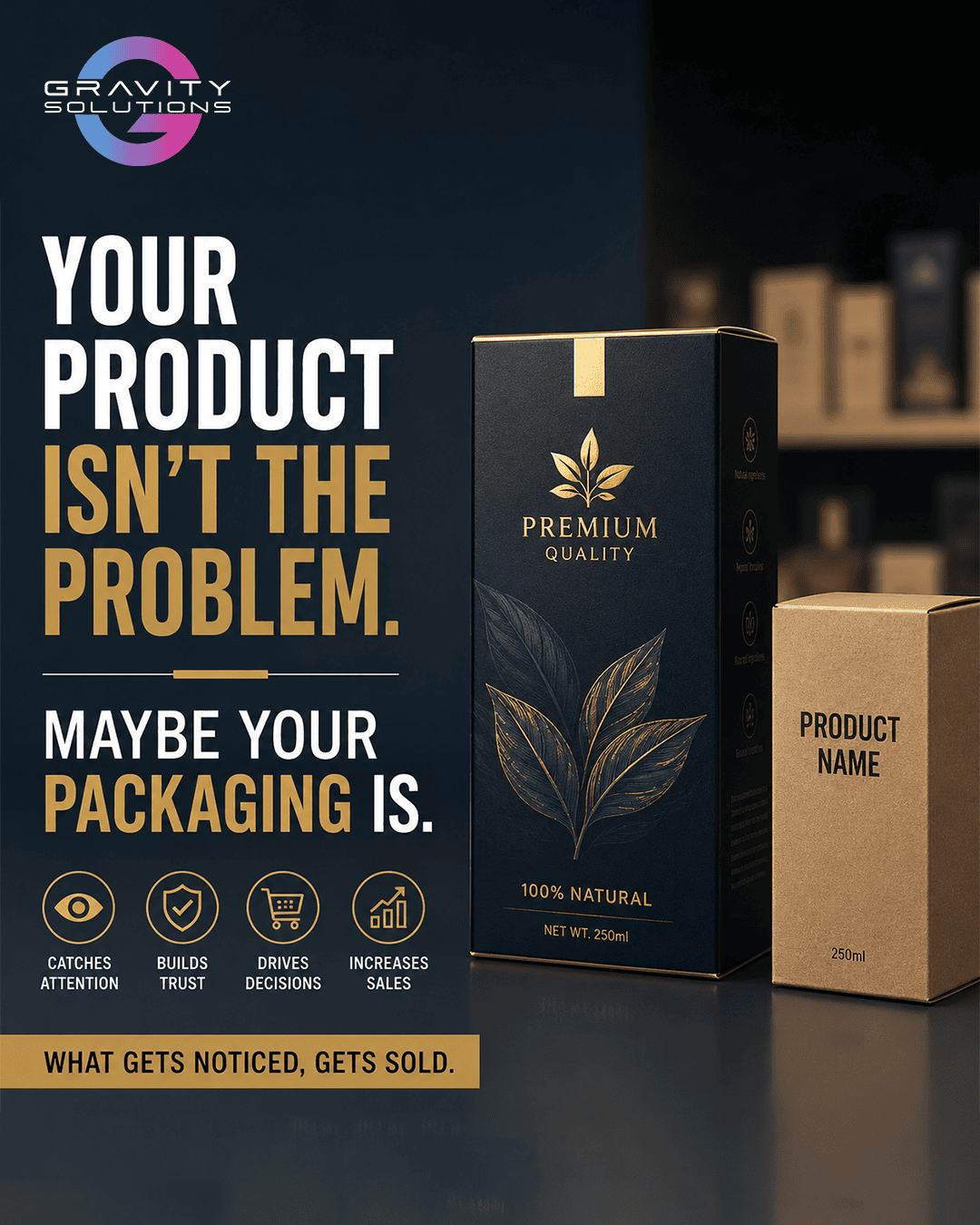
First Impressions Influence Buying Decisions
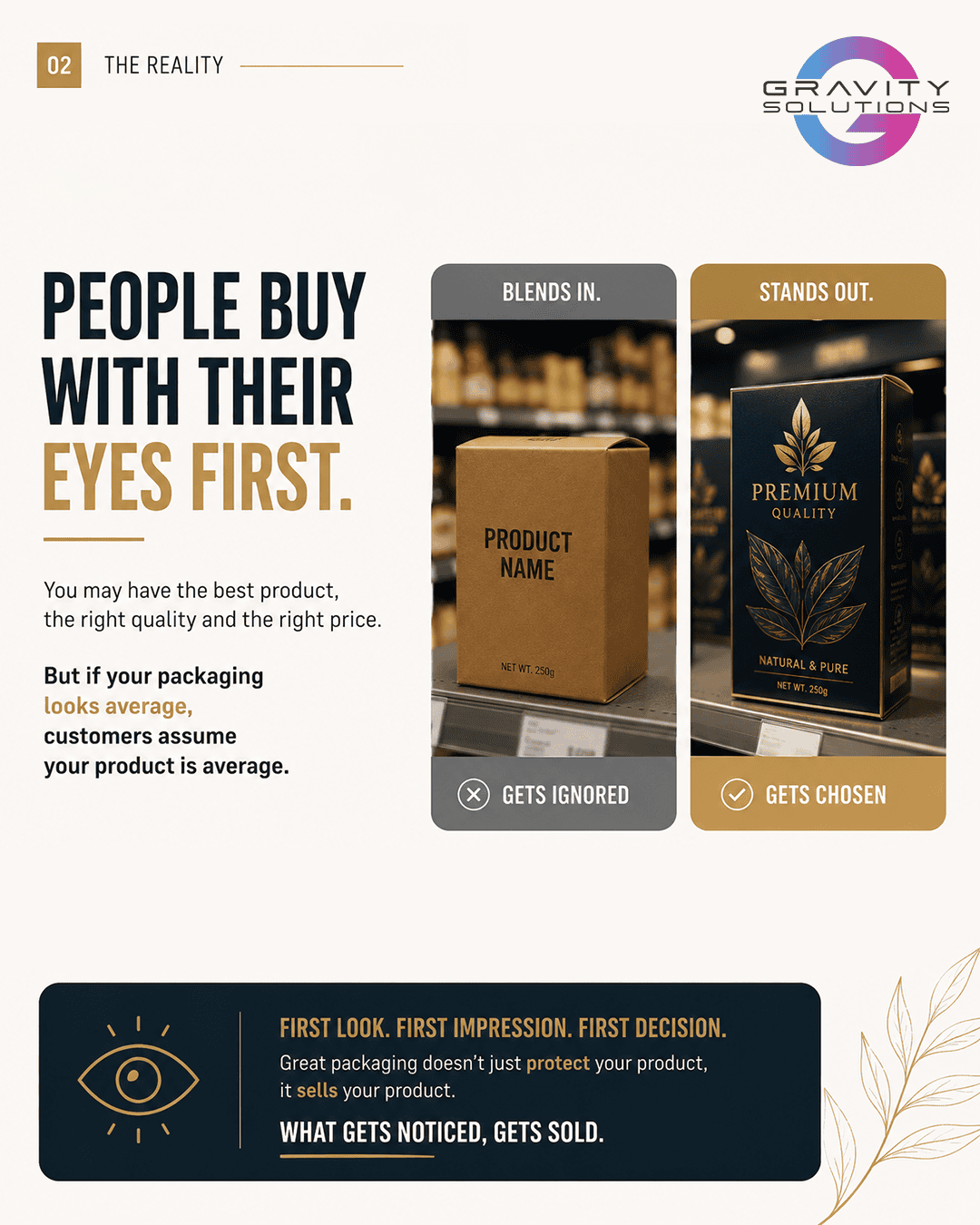
Customers make quick judgments. Long before they read the features or compare prices, they evaluate the quality of your brand through its appearance.
Professional packaging communicates:
- Credibility
- Product quality
- Brand value
- Attention to detail
- Trustworthiness
On the other hand, faded printing, generic boxes, weak materials, or inconsistent branding can reduce confidence—even if the product inside is exceptional.
As the saying goes:
What gets noticed, gets sold.
Packaging Is More Than Protection
Many businesses still think packaging exists only to protect a product during transportation.
In reality, packaging performs several important business functions:
- Builds brand recognition
- Communicates product information
- Differentiates products from competitors
- Enhances retail visibility
- Creates memorable unboxing experiences
- Encourages repeat purchases
Every interaction with your packaging shapes how customers perceive your business.
Common Packaging Mistakes
That Cost Businesses Sales
That Cost Businesses Sales
Many businesses still think packaging exists only to protect a product during transportation.
In reality, packaging performs several important business functions:
- Builds brand recognition
- Communicates product information
- Differentiates products from competitors
- Enhances retail visibility
- Creates memorable unboxing experiences
- Encourages repeat purchases
Every interaction with your packaging shapes how customers perceive your business.
Even established brands lose opportunities because of avoidable packaging issues.
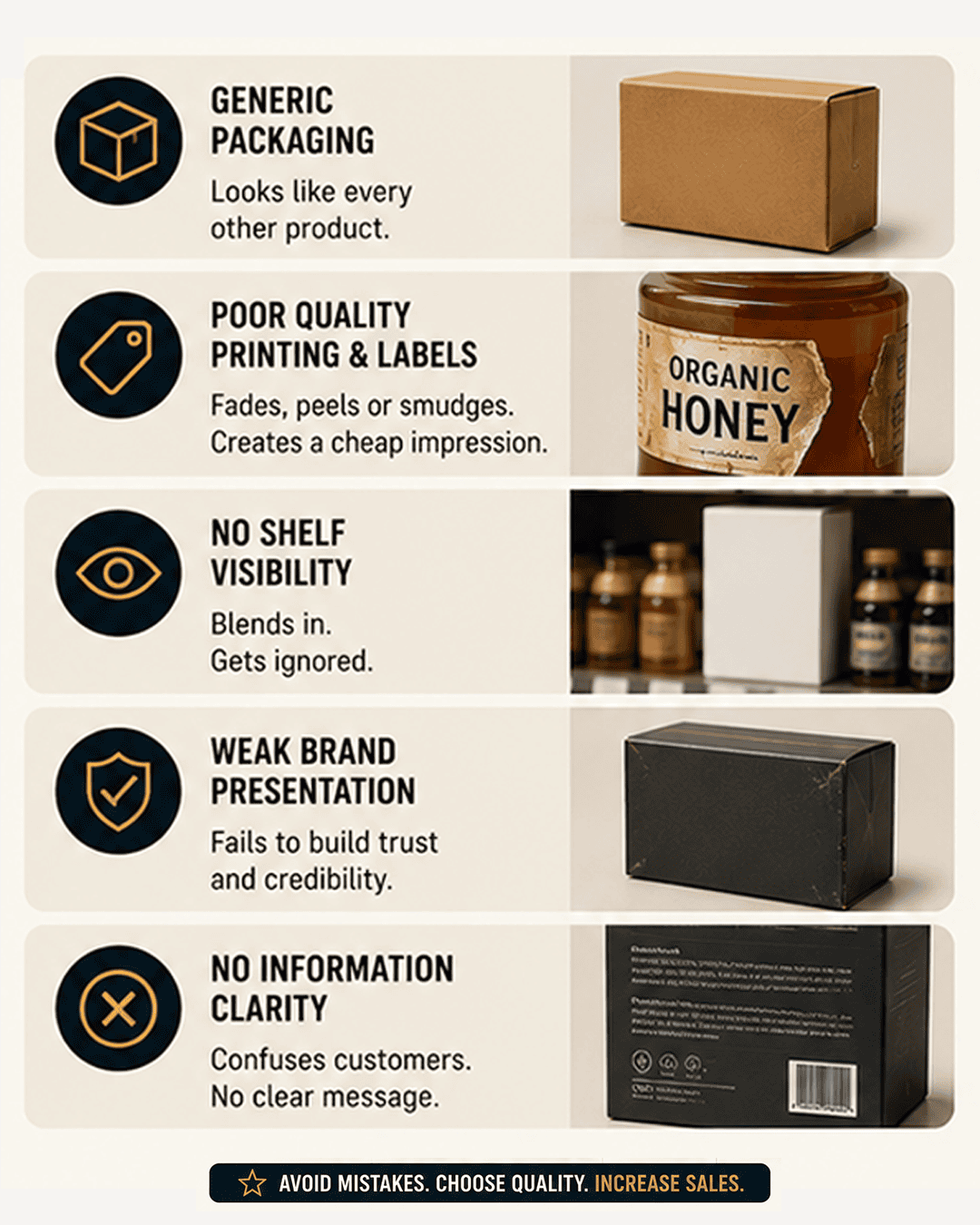
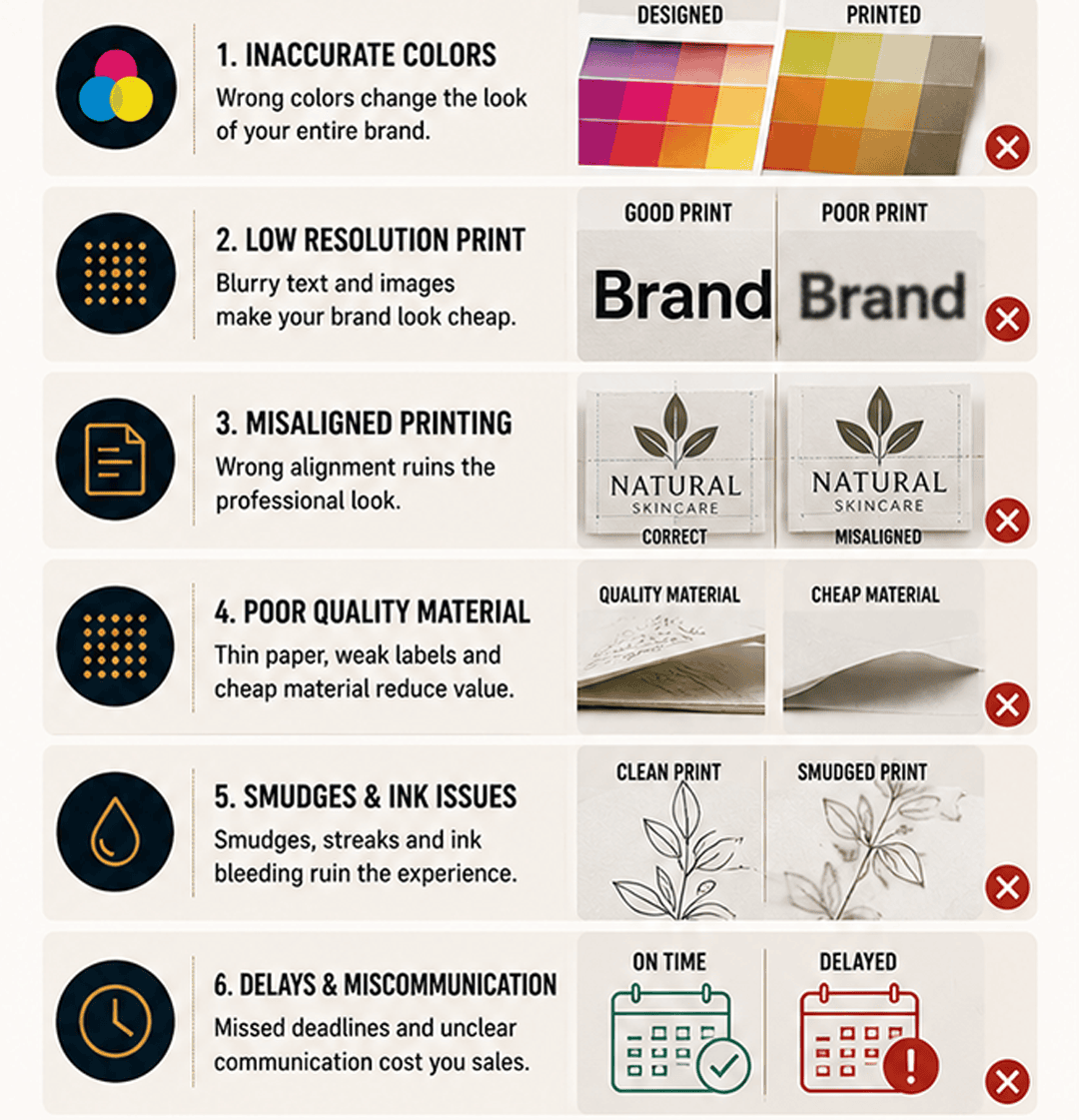
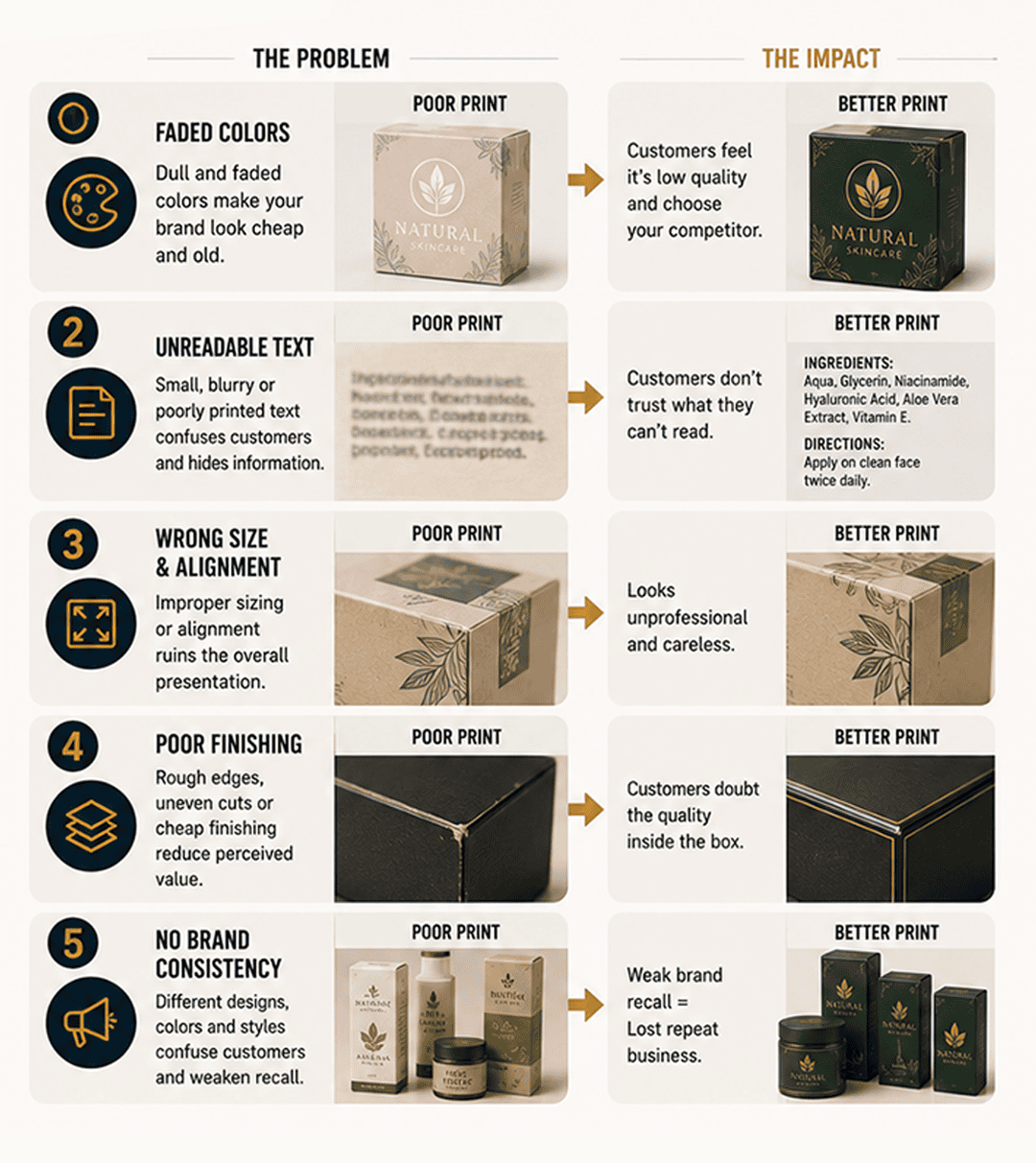
Generic Packaging
If your product looks similar to every other product on the shelf, customers have little reason to notice it.
Poor Print Quality
Low-resolution graphics, inaccurate colors, or blurry text make products appear unprofessional and reduce customer confidence.
Inconsistent Branding
Using different colors, fonts, or layouts across products creates confusion and weakens brand recognition.
Weak Packaging Materials
Damaged boxes, peeling labels, or low-quality finishes negatively affect customer perception and increase the risk of product damage.
No Retail Marketing Support
Packaging works best when combined with retail branding materials such as:
- Shelf Talkers
- Wobblers
- Counter Displays
- Product Inserts
- Promotional Stickers
- Point-of-Sale Materials (POSM)
These elements help products attract attention where purchasing decisions are made.
Think Beyond the Box
Successful brands don’t think in terms of “printing.”
They think in terms of customer experience.
A complete branding strategy may include:
- Custom Product Packaging
- Luxury Rigid Boxes
- Labels & Stickers
- Shopping Bags
- Brochures & Catalogs
- PR Boxes
- Corporate Gift Boxes
- Promotional Merchandise
- Shelf Talkers
- Wobblers
- Display Units
- Event Branding
- Exhibition Materials
When these elements work together, they create a consistent and memorable brand identity.
Packaging Is an Investment, Not an Expense
Some businesses choose the cheapest packaging option to reduce costs.
However, poor packaging often leads to:
- Lower perceived product value
- Reduced retail visibility
- Customer complaints
- Missed sales opportunities
- Weaker brand recognition
- Lower repeat purchase rates
Quality packaging delivers long-term value by improving customer confidence and supporting sustainable business growth.
Final Thoughts
Your product may solve a customer’s problem, but your packaging determines whether they pick it up in the first place.
Professional packaging is more than a protective layer—it is a communication tool, a marketing asset, and an extension of your brand.
Whether you’re launching a startup, expanding into retail, or growing an established business, investing in strategic printing, packaging, and branding solutions helps your products stand out in a competitive market.
Because great products deserve packaging that works just as hard as they do.